
Mysterious Holes in Tripura’s Treasury — Who is Responsible?
Staff Reporter | Duranta TV | Agartala
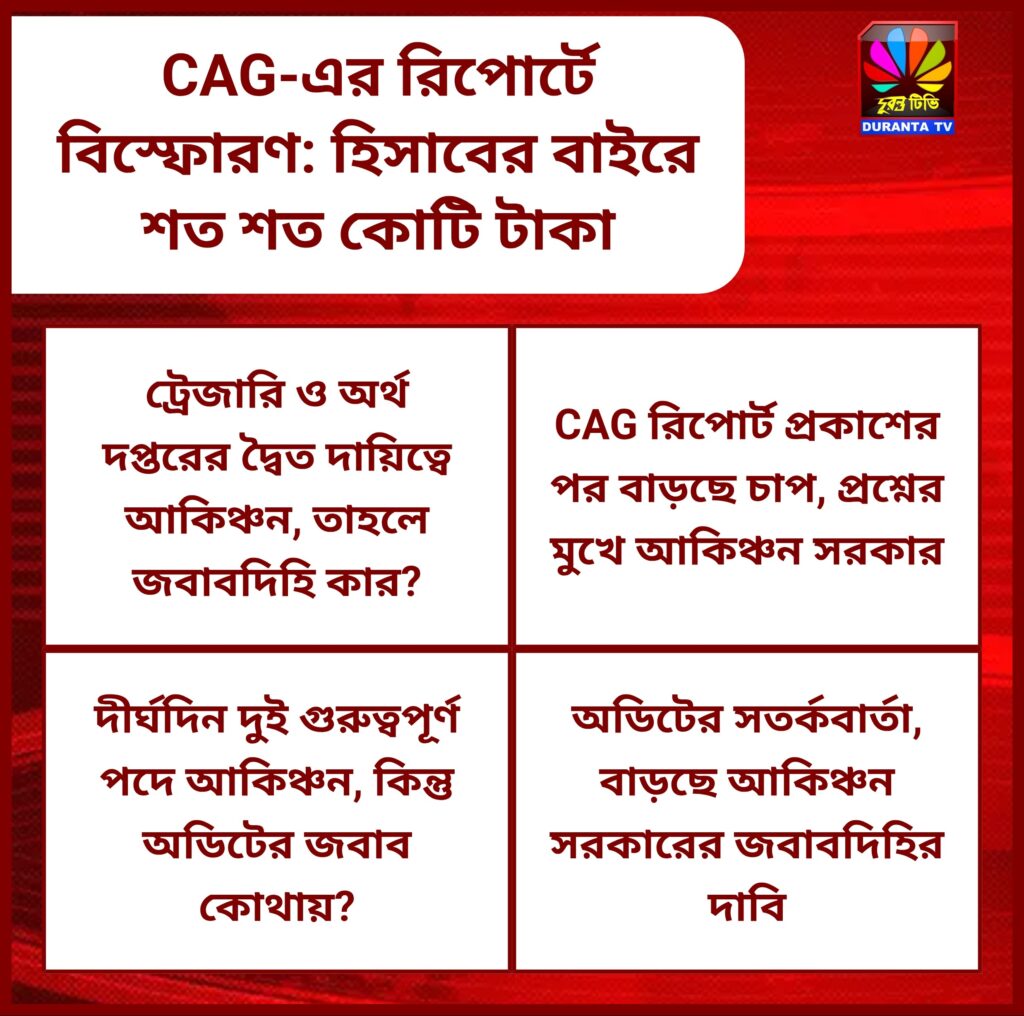
A shocking picture of financial mismanagement within the Tripura Government has emerged from the Comptroller and Auditor General (CAG)’s State Finance Audit Report for 2023-24. Hundreds of crores of rupees allocated for the state’s development are lying outside the Government Treasury (Consolidated Fund) in various personal or unauthorized bank accounts. Questions are now being raised: when the guardian of the State Finance Department has remained in the same key position for years, is this financial irregularity merely administrative incompetence, or is there a larger syndicate operating behind the scenes?
Hundreds of Crores Outside Government Accounts
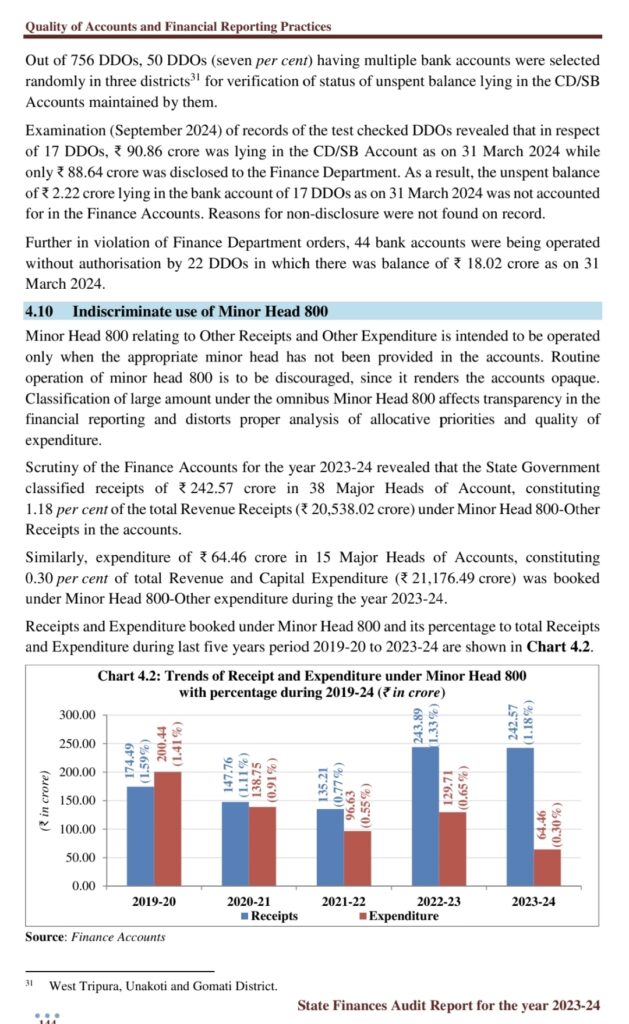
According to the CAG report, as of 31 March 2024, a total of ₹554.16 crore remained parked in the bank accounts of 674 Drawing and Disbursing Officers (DDOs). The alarming fact is that these expenditures had already been booked from the Government Treasury. Even more concerning is that ₹18.02 crore was found deposited in 44 unauthorized bank accounts without any approval from the Finance Department.
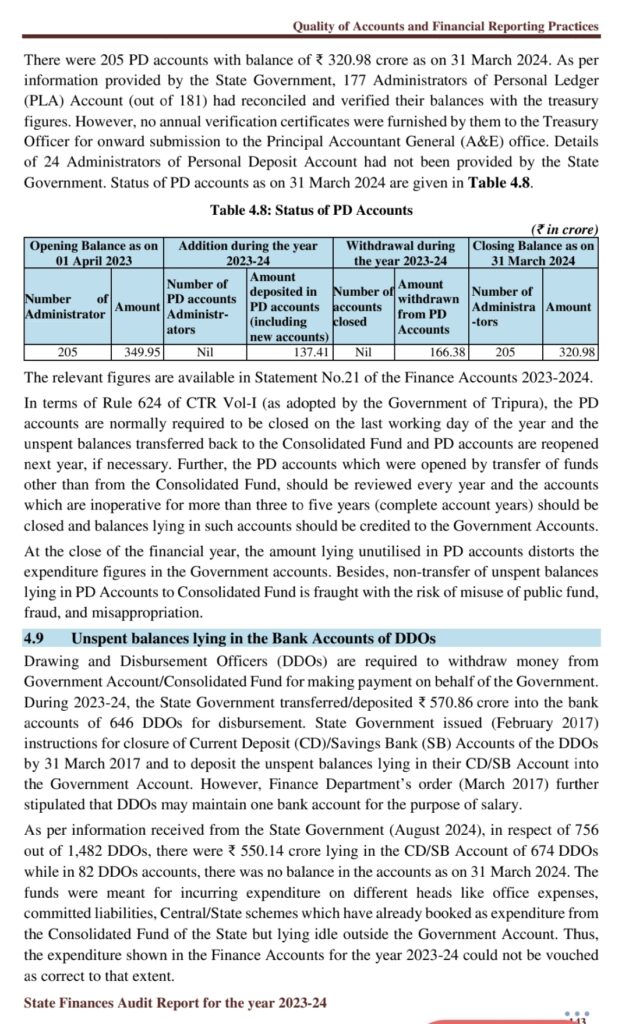
Under Article 266 of the Constitution, every rupee of government money is supposed to be handled strictly through treasury rules. Yet in Tripura, it appears that an unofficial parallel system of financial management has been operating.
The recent CAG report has perhaps raised one of the most uncomfortable questions in the history of Tripura’s financial administration. Government records show expenditure has already been accounted for, yet at the same time hundreds of crores remain idle in bank accounts. Can such a massive discrepancy really be explained away as a mere administrative lapse?
Accountability of the Finance Department
Throughout this entire period, Akinchan Sarkar has held two crucial positions simultaneously—Additional Secretary of the Finance Department and Director of Treasuries of Tripura. When the keys to financial discipline are concentrated in the hands of one individual, it becomes difficult for him to evade responsibility for such large-scale irregularities.
How could 17 DDOs allegedly keep ₹2.22 crore hidden from the scrutiny of the Finance Department without the knowledge of Akinchan Sarkar? Did he fail to notice it, or did he remain silent despite being aware of it?
During the entire period under review, Akinchan Sarkar occupied highly influential positions within the state’s financial administration. Naturally, questions arise as to who should be held administratively accountable for the serious control failures highlighted by the CAG.
Rising Debt While Public Funds Remain Idle
The story does not end there. While the State Government continues to borrow heavily in the name of development projects and the people of Tripura bear the burden of paying interest on those loans, hundreds of crores of government funds remain idle in bank accounts.
Had this money remained within the Government Treasury, the State might not have needed to borrow to the same extent. This raises an obvious question: what is the real justification for imposing additional debt burdens on ordinary citizens when public funds are already lying unused elsewhere?
Why Is the Government Silent?
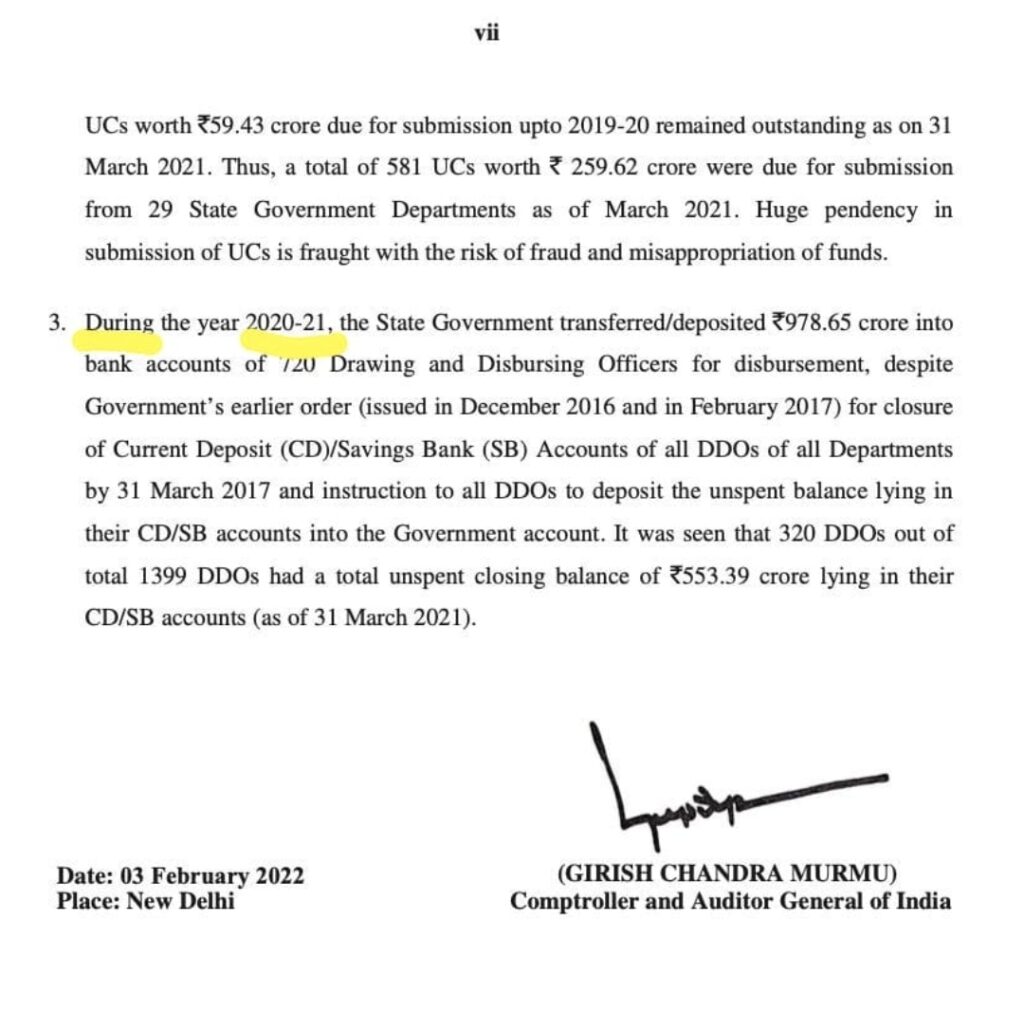
As per existing rules, such accounts were supposed to have been closed as early as 2017. Why was that directive never implemented? Why were some of these unauthorized accounts reportedly allowed to continue operating again in 2020? Why were crores of rupees allowed to remain in such accounts?
Why has no departmental inquiry been initiated against Akinchan Sarkar for administrative negligence or financial irregularities? Public speculation is growing that perhaps larger and more influential figures within the State Secretariat may also be connected to this issue. Is Akinchan Sarkar being shielded to protect others occupying even more powerful positions?
Keeping government money outside the Treasury creates opportunities for financial manipulation, double booking, and possible misappropriation. The audit report clearly states that the authenticity of the State’s expenditure records can no longer be fully certified. This is not merely a violation of rules; it is an assault on the financial integrity of the State.
Will the Government act on the basis of this audit report, or will the responsibility for this financial scandal ultimately extend to the entire Council of Ministers? That remains to be seen.
The people of Tripura are now demanding accountability for what they view as reckless handling of taxpayers’ money. Is the administration blind, or is there a compelling reason for pretending not to see?
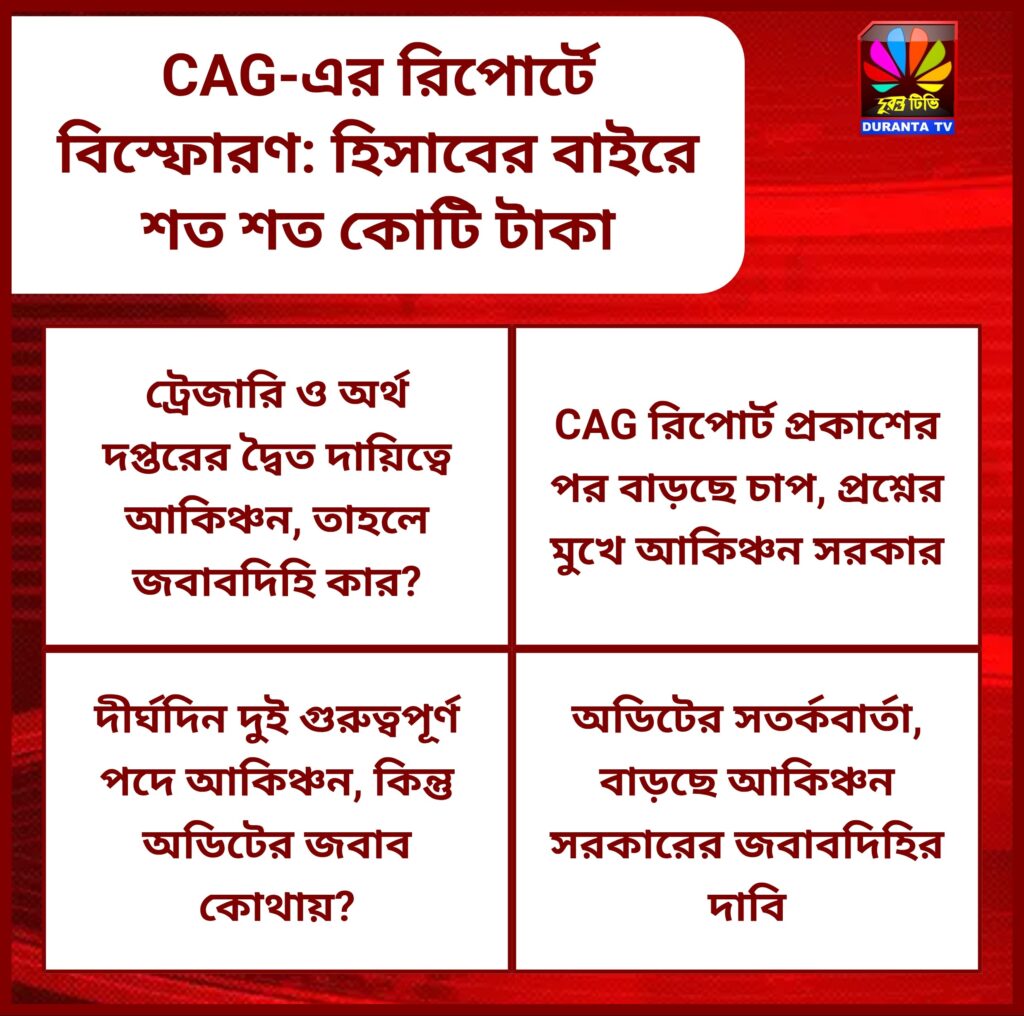
Questions That Refuse to Go Away
Throughout this entire period, Akinchan Sarkar was—and continues to be—both the Additional Secretary of the Finance Department and the Director of Treasuries of Tripura.
If so, who bears responsibility for these developments? Whose incompetence is it? Whose failure of duty allowed such a situation to emerge? Why has Akinchan Sarkar not yet been brought under official scrutiny despite all these findings? Why has the Government not initiated appropriate departmental and legal action against him for serious negligence and dereliction of duty?
Does the mystery run deeper than it appears? Could there be an “Akinchan & Co.” operating within the Secretariat, involving several powerful “big fish” behind the scenes? Is that why he remains beyond the reach of accountability—because taking action against him could expose others as well?
These questions have already been raised.
The responsibility, many argue, rests squarely with Akinchan Sarkar as both the key figure in the State Finance Department and the Director of Treasuries. For years, he has occupied both positions simultaneously, and critics contend that the failure of these two offices has resulted in hundreds of crores of rupees intended for public welfare remaining mismanaged and unutilized.
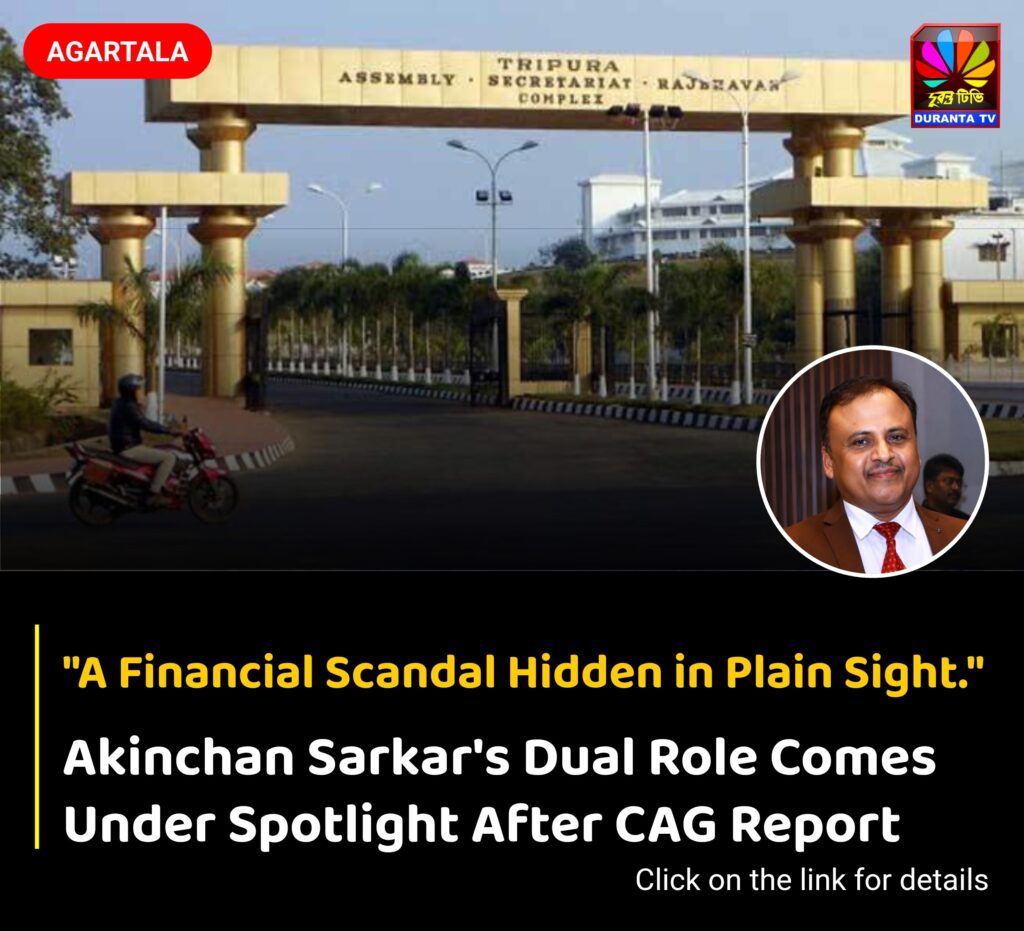
The people of Tripura have suffered because of this situation, and many believe Akinchan Sarkar must accept responsibility for that loss. It is now up to the Government to act.
The question now is: where will this trail ultimately lead, and what truths may yet emerge?
To be Continue….